Title: Getting Started with Ledger: Your Ultimate Guide to Securing Digital Assets
In the ever-evolving world of cryptocurrencies, securing your digital assets is of paramount importance. Whether you’re an experienced crypto investor or just starting your journey, the safety of your funds should be a top priority. This is where Ledger comes in – a leader in the realm of cryptocurrency security. By offering hardware wallets designed for maximum protection, Ledger provides a simple yet effective way to safeguard your cryptocurrencies.
In this guide, we’ll walk you through the steps to get started with Ledger, ensuring you can take full advantage of its features and protect your digital assets from theft, hacks, or loss.
What is Ledger?
Ledger is a French company that specializes in providing hardware wallets for storing cryptocurrencies. Their products, such as the Ledger Nano S and Ledger Nano X, offer one of the most secure ways to store your crypto assets offline. These wallets use advanced encryption to protect private keys – the crucial piece of information required to access and manage your crypto.
The main advantage of Ledger’s hardware wallets is their ability to store your private keys offline, making it nearly impossible for hackers to access them remotely. Unlike software wallets, which store your private keys on your computer or mobile device, hardware wallets keep this sensitive information isolated in a secure physical device. This is a critical layer of protection for anyone serious about safeguarding their crypto holdings.
Step 1: Choose the Right Ledger Device
Ledger offers two primary hardware wallets: the Ledger Nano S and Ledger Nano X. Both are excellent options for securing your digital assets, but they come with slightly different features. Here's a breakdown of their key differences:
- Ledger Nano S:
- Compact and affordable.
- Supports over 1,500 cryptocurrencies.
- USB connection (requires plugging into a computer).
- Limited storage space for apps (up to 3-5 apps at a time).
- Ledger Nano X:
- Bluetooth functionality for use with mobile devices.
- Larger screen for easier navigation.
- Supports more cryptocurrencies and has more app storage (up to 100 apps).
- More expensive than the Nano S but offers more features.
If you’re on a budget or don’t need Bluetooth functionality, the Ledger Nano S is a great choice. However, if you need more storage or want to use your wallet with a mobile app, the Ledger Nano X might be a better fit.
Step 2: Set Up Your Ledger Wallet
Once you've chosen your Ledger device, the next step is setting it up. Follow these steps for a smooth setup:
- Unbox and Connect: Start by unboxing your Ledger hardware wallet. Connect it to your computer or mobile device using the provided USB cable (for the Nano S) or via Bluetooth (for the Nano X).
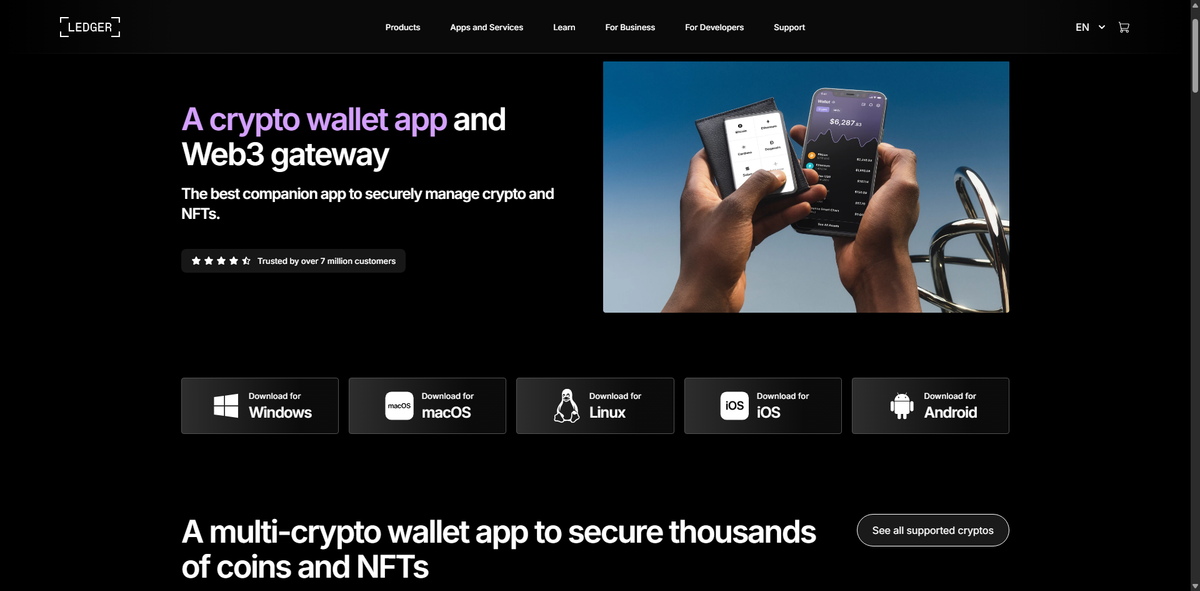
- Install Ledger Live: Ledger Live is the companion app for your hardware wallet. It allows you to manage your crypto assets, install applications for different cryptocurrencies, and perform updates. Download the app from Ledger's official website (ledger.com) and install it on your device.
- Initialize the Wallet: Follow the on-screen instructions to initialize your Ledger device. You will be prompted to create a PIN code, which acts as an extra layer of security for your wallet.
- Backup Your Recovery Phrase: One of the most critical steps is backing up your recovery phrase. This 24-word phrase is your backup in case your Ledger device is lost, stolen, or damaged. Write it down on the recovery sheet provided in the box and store it in a safe place. Never store your recovery phrase online or on your computer.
- Install Cryptocurrency Apps: Once your wallet is set up, you can install apps for the cryptocurrencies you want to store. Ledger supports a wide range of assets, including Bitcoin, Ethereum, and more. You can install and manage these apps directly from Ledger Live.
Step 3: Add Cryptocurrencies to Your Ledger Wallet
With your Ledger wallet set up and ready, you can now transfer cryptocurrencies to it for safekeeping. This is where the security of the device shines:
- Generate a Receiving Address: Using Ledger Live, you can generate a receiving address for the cryptocurrency you wish to deposit. Each asset (e.g., Bitcoin, Ethereum) will have its own unique address.
- Send Crypto to Your Ledger: Once you have your receiving address, go to your crypto exchange or existing wallet and initiate a transfer. Simply paste the address into the recipient field and confirm the transaction.
- Confirm the Transaction: After initiating the transfer, your Ledger device will ask you to confirm the transaction on its screen. This is an added layer of security to ensure that the funds are being sent to the correct address.
- Transaction Completion: Once confirmed, the transaction will be processed and your cryptocurrency will appear in your Ledger wallet in Ledger Live. It’s always a good idea to double-check the transaction details to ensure everything looks correct.
Step 4: Secure Your Ledger Wallet
While the Ledger hardware wallet provides excellent protection for your assets, there are additional steps you can take to further secure your funds:
- Enable Two-Factor Authentication (2FA): For an extra layer of security, enable 2FA on your Ledger Live account. This ensures that even if someone gains access to your computer or mobile device, they won’t be able to access your funds without the second authentication factor.
- Use a Passphrase: Ledger allows you to add an additional passphrase to your recovery phrase. This passphrase acts as a hidden wallet and adds another layer of protection.
- Keep Your Device Safe: Store your Ledger device and recovery phrase in a secure location. Consider using a fireproof safe or a safety deposit box for extra protection.
Step 5: Monitor and Manage Your Assets
With your Ledger wallet set up and secured, you can use Ledger Live to manage your cryptocurrency portfolio. Ledger Live provides an intuitive interface for checking your balances, tracking transactions, and even buying or selling crypto through integrated exchanges.
You can also use Ledger Live to update your device firmware, install new cryptocurrency apps, and ensure that your wallet remains up-to-date with the latest security features.
Conclusion
Getting started with Ledger is straightforward, and the security it offers is second to none. By following these steps, you can confidently protect your digital assets and take control of your financial future. Whether you're holding a few Bitcoin or managing a diverse portfolio of digital currencies, Ledger's hardware wallets offer the security you need to protect your investments.
Remember, the key to securing your assets lies in safeguarding your recovery phrase and taking advantage of the advanced features Ledger offers. Start today and protect your crypto with Ledger!